Does Google care about AI-generated content? What does Sehnsucht have to do with the latest Google algorithm update?
In one of his recent YouTube videos, Neil Patel, a marketing guru, said that 52.1% of all new content is now written by AI, but it gets only 4.9% of the organic traffic.
Human-generated content is down to 14.5% of what gets published, but it gets 87% of the organic traffic. Google and other major search engines have tweaked their algorithms to provide what people are actually searching for — human content.
Neil Patel says the less you edit your AI draft before publishing, the lower it will rank. The more you write old school — manually — the higher it will rank.
Ironically, AI is promoted as a tool to get things done “quicker and easier,” while Google is actively discouraging the “quick and easy.”
What is this strange paradox? The better AI writes, the less we want it.
The best answer to this conundrum is C.S. Lewis’s quote from Pilgrim’s Regress:
“What does not satisfy when we find it, was not the thing we were desiring.”
Google gradually realizes that they will lose profit if people aren’t satisfied with search results. And they see that people are looking for “something else.”
C.S. Lewis calls this “something else” Sehnsucht. For Lewis, Sehnsucht is this profound yearning — a piercing desire for the unnameable. A unique “stab of joy.” When I think I desire something, but it doesn’t satisfy when I find it, I experience Sehnsucht — a yearning for the real.
The question immediately arises: “What is real”? The mind doesn’t know the answer. The heart does — but it cannot explain. It can only feel it. The more the fine line between the artificial and real is erased, the more the gap is “felt” as a desire for the unnamable.
The Greeks called it nostos (νόστος), the longing for homecoming — a concept that eventually gave rise to the word nostalgia, meaning the pain of returning home.
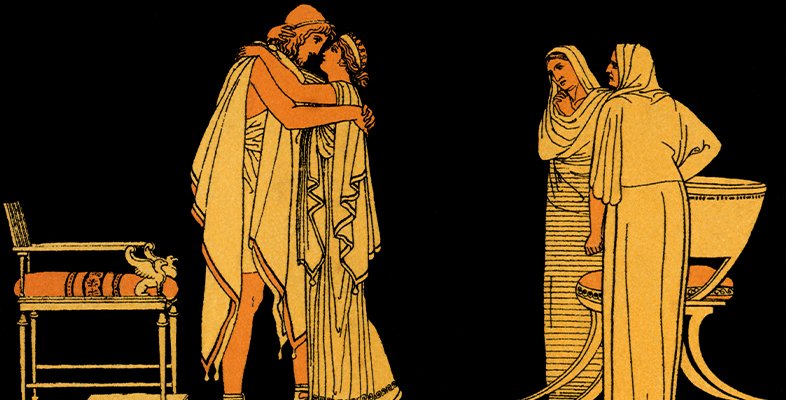
When Odysseus sets out for the Trojan War, he becomes part of a quest for honor and glory. And he achieves the glory he thought he wanted — only to discover that what he truly desired was something else: to return home.
AI, as a symbol of achievable earthly glory, functions like a magnifying glass: it clearly reveals the “felt difference” between what we truly want and what we think we want. When people say: “The moment I realize something is AI-generated, I turn off,” they are Odysseus coming to his senses and realizing that he wants “something else.”
Google may not feel this longing, but the numbers show that people are looking for “something else.” Ultimately, we want to return home — to human connection. Nothing else seems to satisfy.
AI continues to awaken a powerful Sehnsucht within us, and that longing is growing. We watch the bastions of Troy fall before its triumphant advance, only to realize: