Why does AI struggle with nuance? I was in the process of translating a book from Russian into English when the client wrote and said that he had run my translation through Microsoft Copilot as a quality check. He asked me to implement the changes based on the feedback.
As I worked through the recommendations, I realized that some of them simply could not be adopted. So I called him and said:
“The author quotes 1 Corinthians 13:12: ‘Now we see through a glass, darkly.’ He then alludes to this ‘seeing darkly’ throughout the chapter using the exact same expression. Copilot claims that the word darkly here means gloomily and recommends replacing it with ‘we live in the world by guesswork.’
But if I make this change, the allusion will disappear. Readers will no longer recognize Paul’s words from 1 Corinthians behind the phrase ‘we live in the world by guesswork.’ Are you willing to sacrifice the allusion?”
He replied: “My goodness, no! The entire chapter is hinged upon the reader catching this subtle hint. Without it, the meaning falls apart. Thank you for catching it!”
I thought to myself: “But why didn’t Copilot spot it in the first place?” So I opened my laptop and asked directly: “When you determine the meaning of a text, how do you do it? Do you ‘feel’ what the author is trying to say?”
The answer was illuminating:
“When I interpret a text, I don’t feel where the author is coming from. I don’t experience empathy or emotional resonance. What I do is recognize patterns in language… I detect textual signals.”
Understanding without empathy is misunderstanding. If I wish to understand another person, I must attend to more than textual signals. I must empathize. I must resonate. I must sense how the words reverberate within the living context from which they emerged.
Had I not felt what the author was doing, I might never have noticed this all-important allusion.
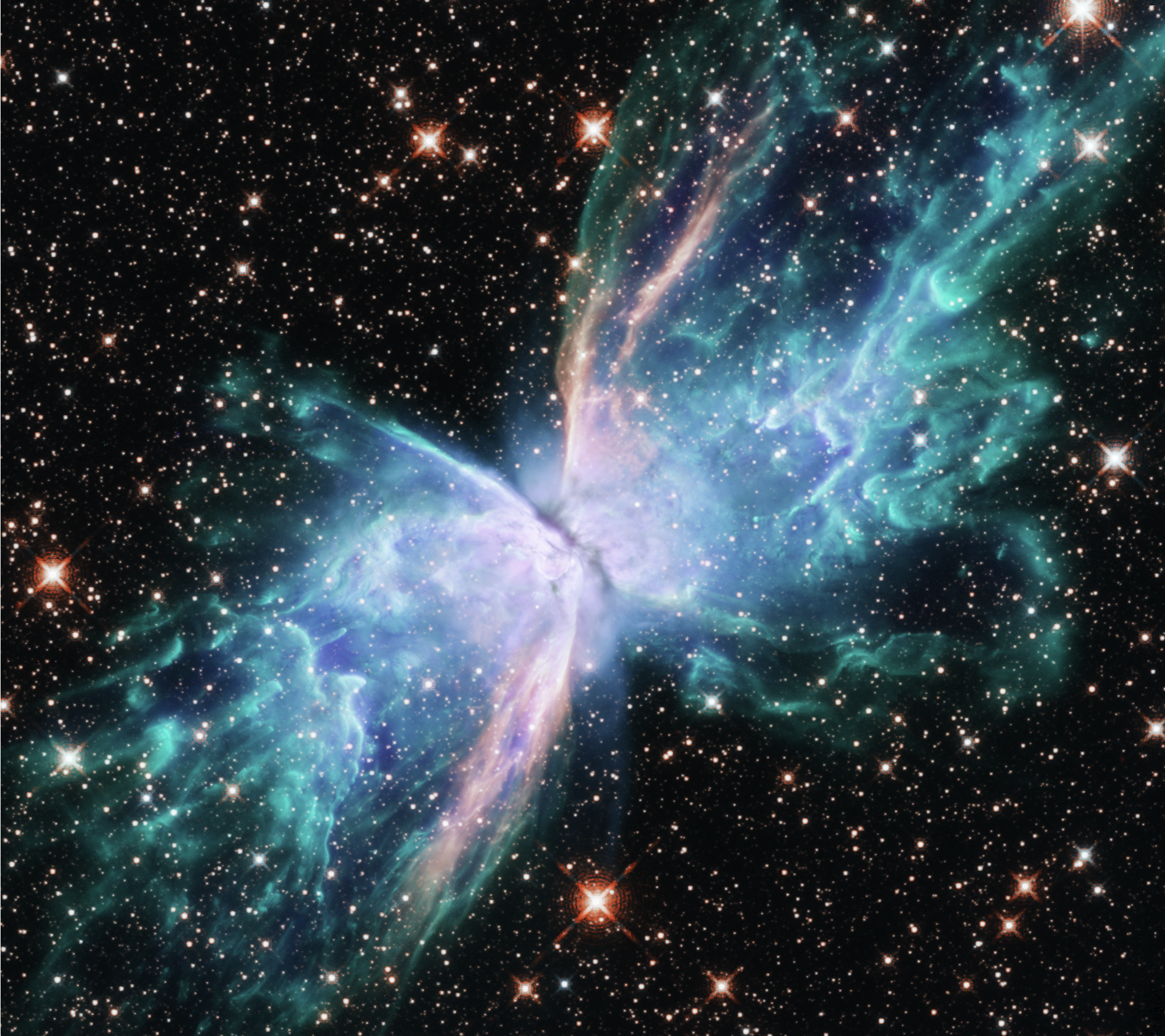
Interestingly, the French word nuance means “shade, slight difference, subtlety.” It is derived from nuer, which in turn comes from nue meaning “cloud” (hence nebula). The paradox of nuance is that it reveals by shading and obscuring — unveiling by making something more nebulous.
A nuance is a shade, a cloud that overshadows the visible. When you look at this cloud, you don’t see clearly in the ordinary sense — but you see all the more for it. You understand by sensing what the cloud hides.
A nuance disrupts the straightforward flow of thought and creates in you this nebulous feeling: “Wait a minute. The text does not put it clearly, but I clearly feel that something is hidden behind this.”
A nuance causes us to “unknow” what we thought we knew — so we can pause and sense the subtle resonances arising from behind the nebula. And then, suddenly, the cloud parts, and the sun breaks through. We see.
Paradoxically, no vision is entirely clear without a nebula. Textual clues are not enough to arrive at meaning. There’s more to communication than markings on a page or sound waves in the air. Copilot cannot empathize and therefore cannot catch the author’s feeling. What the author feels is more important than what the author says.
For meaning does not reside only in what is said. It resides mainly in what is unsaid — hinted at in between the words.
The article you are reading right now contains countless textual clues to what I am trying to say, but what I am actually saying cannot be deduced from the textual clues alone. One must feel what lies behind those clues. Textual clues don’t create clarity; they create a veil — a nebula of nuances to be seen through.
That’s how humans communicate; we speak in words, but we create nebulas. We speak not to make things clear but to point to something that cannot be spoken. Every word, ultimately, leads us into the cloud. As Asaph says in Psalm 78: “I will open my mouth in a parable: I will utter dark sayings of old…”
Why does he call his sayings dark? Because every saying is a cloud; it reveals by hiding. It invites us to feel, empathize, recognize — penetrating the veil and participating in the meaning.
Meaning can only be found on the other side of the nebula — when the veil is suddenly lifted, and we hear the unutterable.